Living in a rental comes with one frustrating limitation: you can’t tear into the walls to add insulation or resilient channels. Thin noisy walls, loud neighbors, and traffic sounds can make your home feel anything but peaceful. The good news? You don’t need permission—or permanent construction—to dramatically reduce unwanted noise. These seven proven solutions deliver real results without risking your security deposit.
Why Soundproofing Without Modification Is Possible
Sound travels through walls in two main ways: airborne noise (voices, music, TV) and impact noise (footsteps, banging). Renter-friendly soundproofing focuses primarily on absorbing and blocking airborne sound and adding mass to existing surfaces. Since you can’t access the wall cavity, the strategy shifts to adding dense, sound-absorbing layers on the surface. The key principles are mass, damping, and absorption. The more material you layer onto a wall, the harder it becomes for sound waves to pass through. Combining several methods below produces the biggest improvement.
1. Hang Acoustic Panels or Sound-Absorbing Art
Acoustic panels are one of the most effective renter-friendly options because they target echo and absorb mid-to-high frequency sound. Made from compressed fiberglass or foam wrapped in fabric, they reduce reverberation inside your room and dampen sound transmission.
How to install renter-safe: Use removable adhesive strips, picture-hanging hooks, or French cleats rated for the panel’s weight. Many panels are lightweight enough for Command-style strips. For a stylish upgrade, choose printed acoustic art panels that double as décor.
Place panels on the wall directly facing the noise source for maximum benefit. Covering at least 20–30% of the wall surface produces noticeable results. Bass-heavy noise won’t disappear, but conversations and TV chatter will soften considerably.
2. Build a Bookshelf “Sound Barrier”
A tall, fully loaded bookshelf is a surprisingly powerful soundproofing tool. Books add significant mass and irregular surfaces that scatter and absorb sound waves. This is one of the cheapest and most aesthetically pleasing methods.
Maximize effectiveness: Choose a shelf that spans floor-to-ceiling and packs it densely. Avoid gaps—empty spaces let sound pass through easily. Mix book sizes to break up flat surfaces, and push the unit flush against the shared wall. For extra absorption, place fabric bins, folded blankets, or decorative textiles on some shelves.
This solution works especially well against neighbor noise and offers the bonus of storage and style. It requires no wall modification whatsoever.
3. Install Thick Soundproofing Curtains or Wall Hangings
Heavy textiles absorb sound and add a damping layer to hard walls. Soundproofing curtains made with mass-loaded vinyl cores or dense woven fabric can be hung across an entire wall using a tension rod or removable bracket system.
Pro tip: The thicker and heavier the curtain, the better. Look for curtains weighing several pounds per panel and labeled “acoustic” or “noise-reducing.” Hang them slightly away from the wall to create an air gap, which improves performance. Tapestries, quilts, and woven rugs hung vertically work similarly while adding warmth and character to your space.
This approach is ideal for renters who want a quick, reversible upgrade that also blocks light and drafts.
4. Use Mass-Loaded Vinyl (MLV) Behind Décor
Mass-loaded vinyl is a flexible, dense material engineered specifically to block sound. While it’s often installed inside walls, renters can attach it to the surface and conceal it behind tapestries, curtains, or fabric panels.
Renter-friendly method: Hang MLV using a tension rod, grommets, or heavy-duty removable hooks—avoid permanent nails. Once mounted, cover it with decorative fabric so it blends in. MLV adds substantial mass, making it one of the few surface solutions that meaningfully reduces low-frequency noise like bass and traffic rumble.
Because MLV is heavy, ensure your hanging system can support the weight. Combine it with acoustic panels for a layered, high-performance barrier.
5. Apply Removable Acoustic Foam Strategically
Acoustic foam is affordable, lightweight, and easy to install with removable adhesive. While foam alone won’t block heavy noise, it excels at absorbing echo and reducing the sharpness of incoming sound.
Installation tip: Use peel-and-stick removable mounting squares rather than permanent glue, which can damage paint. Arrange foam panels in a grid or geometric pattern for both function and visual appeal. Concentrate coverage on the wall closest to the noise.
Foam works best as part of a multi-layer approach—pair it with curtains, panels, or a bookshelf. On its own, it’s perfect for improving sound quality in home offices, podcast setups, or media rooms.
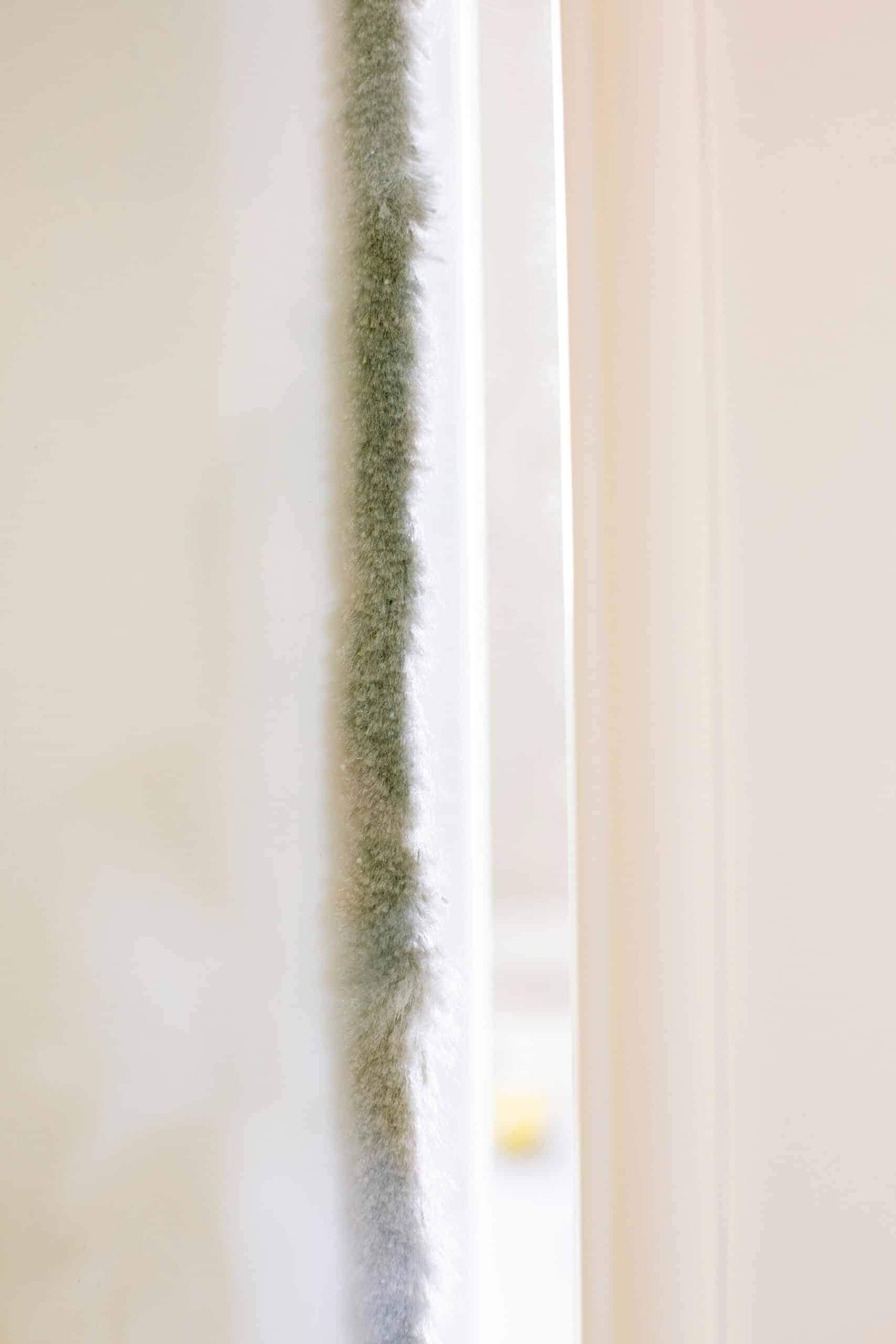
6. Seal Gaps and Add Weatherstripping
Sound leaks through the smallest openings. Gaps around outlets, baseboards, door frames, and where the wall meets the ceiling allow noise to sneak in. Sealing these gaps is one of the cheapest yet most overlooked soundproofing steps.
What to do: Apply removable acoustic caulk or foam gaskets behind outlet and switch plate covers. Use weatherstripping tape around door edges and add a door sweep or draft stopper at the bottom. These materials peel away cleanly when you move out.
Even if the wall itself can’t be modified, plugging air leaks can reduce perceived noise significantly. Think of it like closing windows on a windy day—the difference is immediate.
7. Add a Freestanding Room Divider or Padded Furniture
Strategic furniture placement creates additional barriers between you and the noise source. A padded freestanding room divider, an upholstered headboard, or a large sofa positioned against the shared wall adds mass and absorption.
Best practices: Choose upholstered, dense furniture rather than hollow pieces. Place soft items—pillows, cushions, blankets—near the wall to absorb sound. Acoustic room dividers designed with sound-dampening cores offer portable, flexible protection that’s perfect for renters.
This method is completely non-invasive and easily rearranged. Combining padded furniture with curtains or panels multiplies the effect, creating a quieter, cozier environment.
Combining Solutions for Maximum Results
No single method completely soundproofs a wall, but layering several creates a dramatic improvement. For the best results, start with sealing gaps, add mass with MLV or a bookshelf, then finish with absorptive layers like acoustic panels and curtains. This combination tackles airborne noise, echo, and air leaks simultaneously.
Track your progress by testing before and after with a phone decibel app. Most renters report noticeable quiet within a few hours of installing these solutions.
Quick Tips for Renters
- Always use removable adhesives, tension rods, and damage-free hanging hardware.
- Prioritize the wall directly facing the noise source.
- Combine mass (heavy materials) with absorption (soft materials) for best results.
- Keep receipts and packaging in case you need to reinstall elsewhere.
- Check your lease for any restrictions before mounting heavier items.
These seven renter-friendly soundproofing solutions prove that a quieter home doesn’t require construction, contractors, or permission. With smart material choices and strategic placement, you can transform a noisy rental into a peaceful retreat—and take every solution with you when you move.